Case Study
Adelaide Film Festival
A seamless digital festival experience.
Client
Adelaide Film Festival
Collaborators
Features

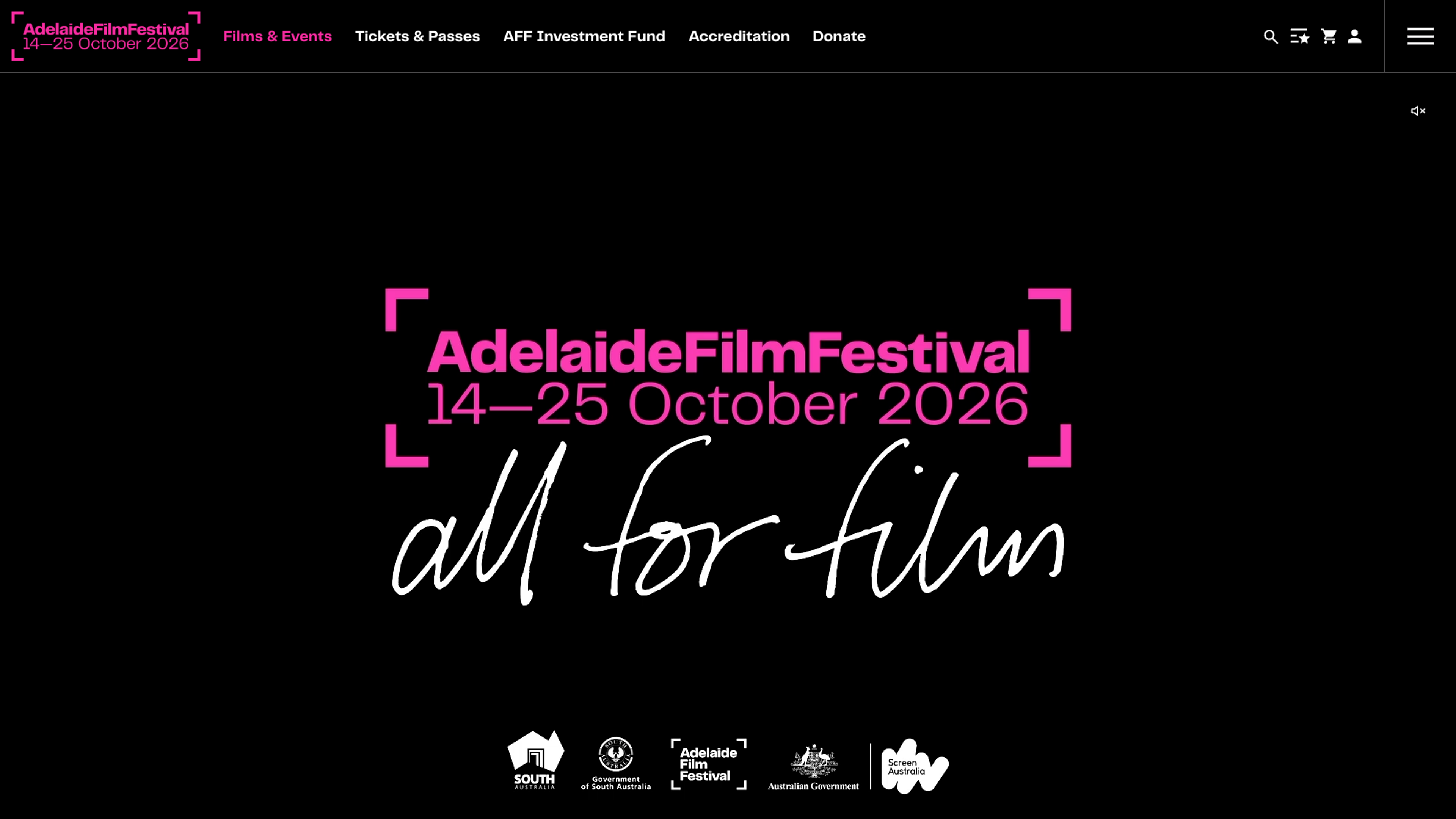
Adelaide Film Festival asks audiences to make hundreds of decisions quickly: what to see, when to see it, where it is screening and whether tickets are still available. The previous website made that harder than it needed to be.
Rockethouse built a digital platform that brings program discovery, live scheduling, ticketing and editorial publishing into one coherent festival experience. Complex behind the scenes, clear in the moments that matter.
Adelaide Film Festival is South Australia’s premier screen event, presenting an ambitious mix of films, talks, special events and industry programs. The website is not simply a promotional channel. It is where audiences discover the program, compare sessions and buy tickets, often while the festival is moving around them.
The original brief described a site with significant content limitations, outdated pathways and a program that could be difficult to navigate. Audiences struggled to understand when a film was screening, whether it had sold out and which venue it belonged to. For the festival team, everyday publishing was demanding, while ticketing and program data needed to move reliably between external systems and the public site.
The opportunity was to make a large, changing festival feel easier to explore without flattening its character. The new platform needed to support discovery and conversion, give the internal team greater control, and preserve the value of Adelaide Film Festival’s program long after the closing credits.
developed the festival’s brand direction. translated that identity into a cinematic digital language, and Rockethouse shaped it into a responsive platform built around the real behaviour of audiences and editors.
From program to plan
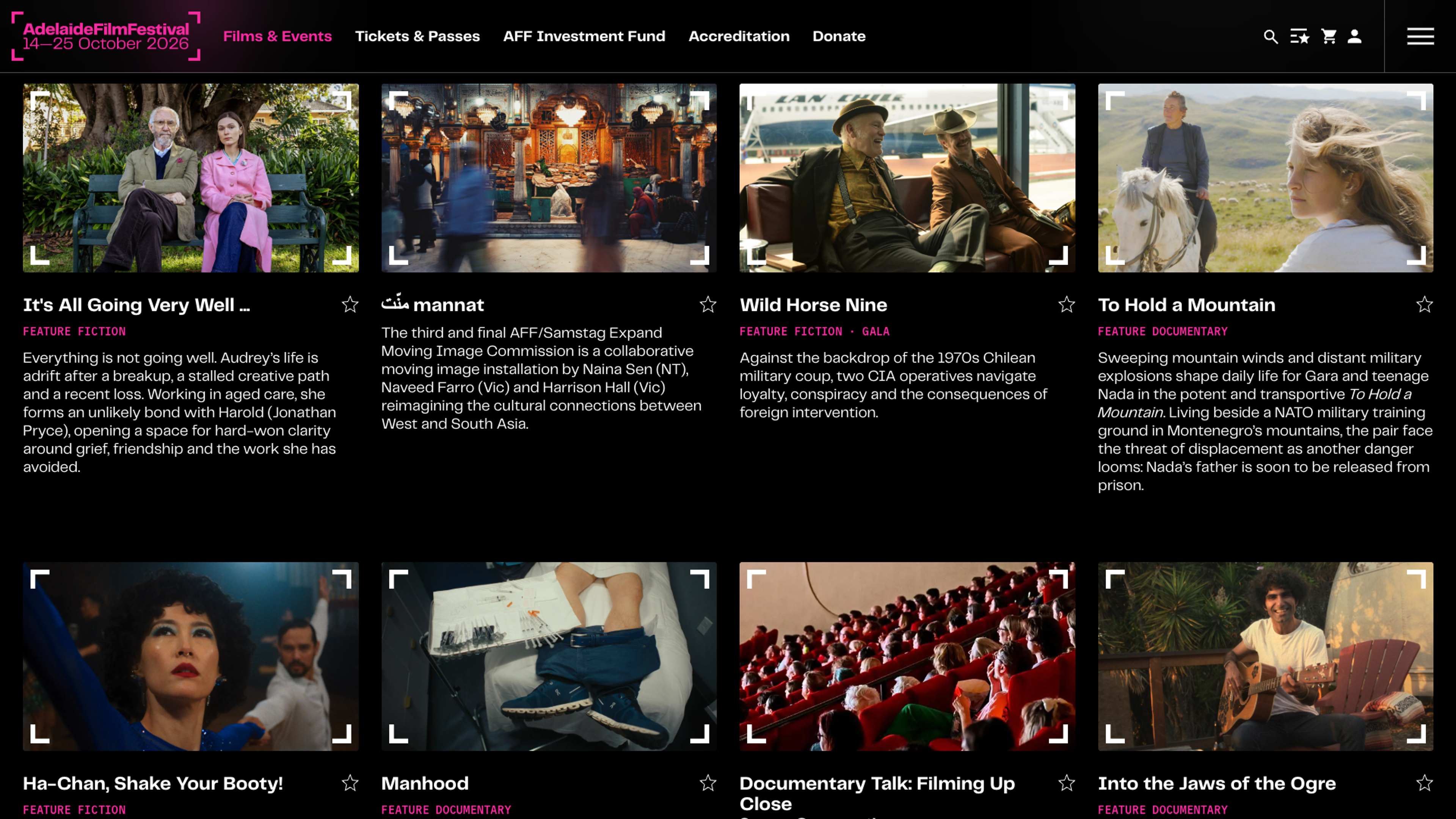
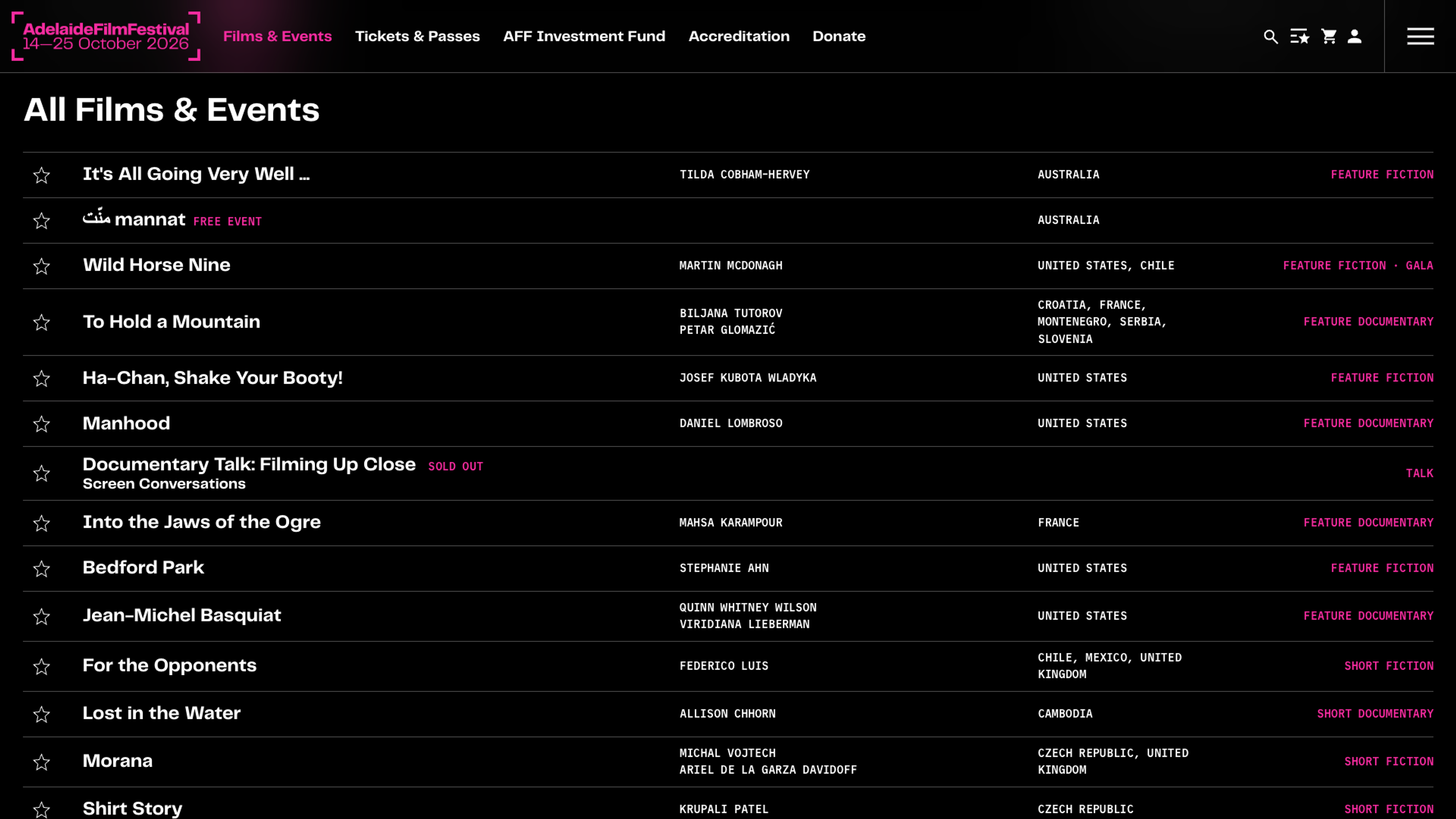
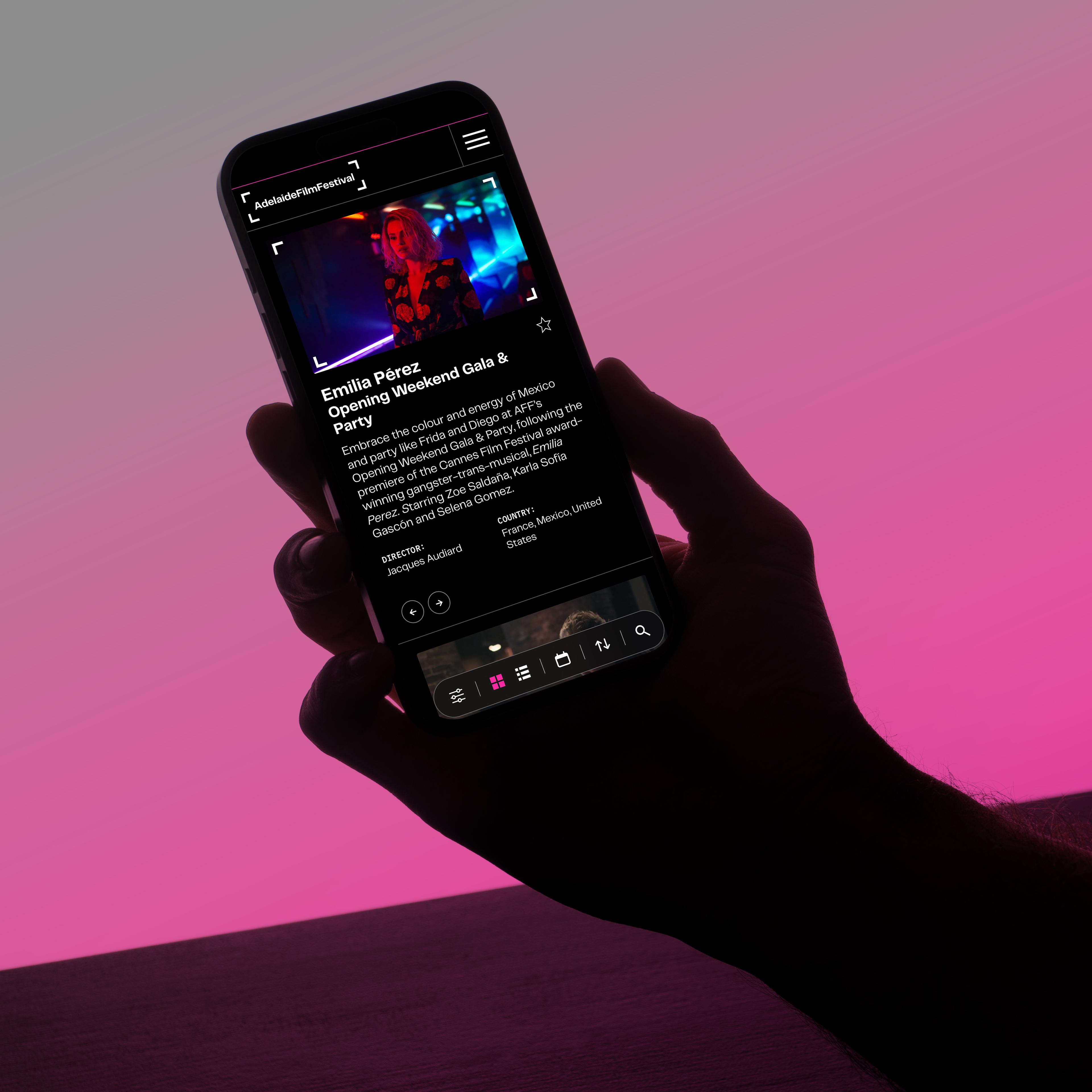
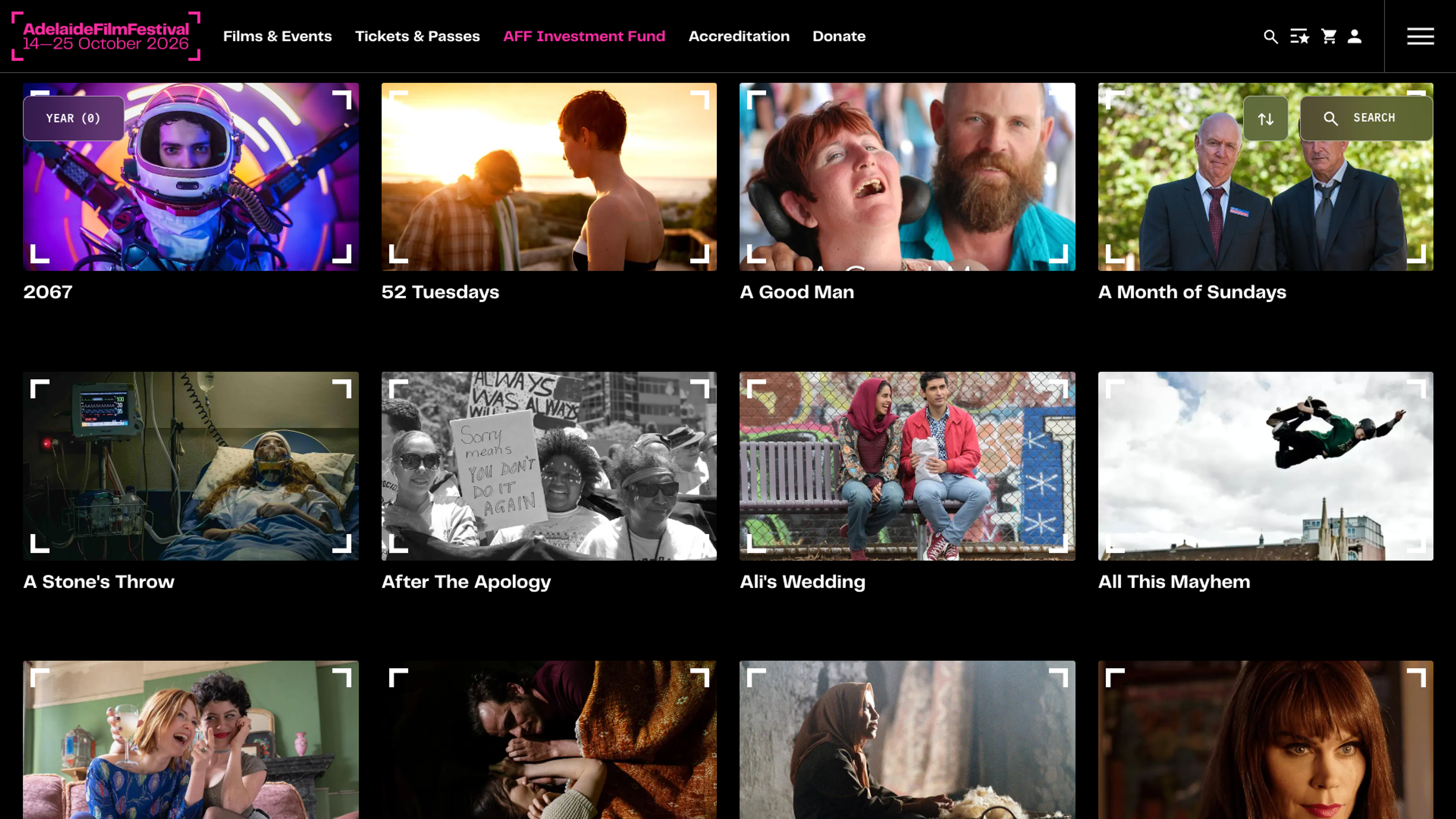
Festival audiences rarely browse in one way. Some begin with a date, others with a venue, filmmaker, genre, country, language or program strand. The program supports both image-led discovery and compact comparison, combining grid and list views with search, sorting and detailed filters.
Every selection is reflected in the URL. A visitor can return to a carefully filtered program, while the festival team can share a ready-made selection through campaigns and social media. A chronological schedule then brings the practical details together: start time, runtime, venue and live states such as Selling Fast, Sold Out or Waitlist.
Watchlist controls, Playing Today and Up Next help turn browsing into a personal festival plan.


Ticketing stays inside the experience
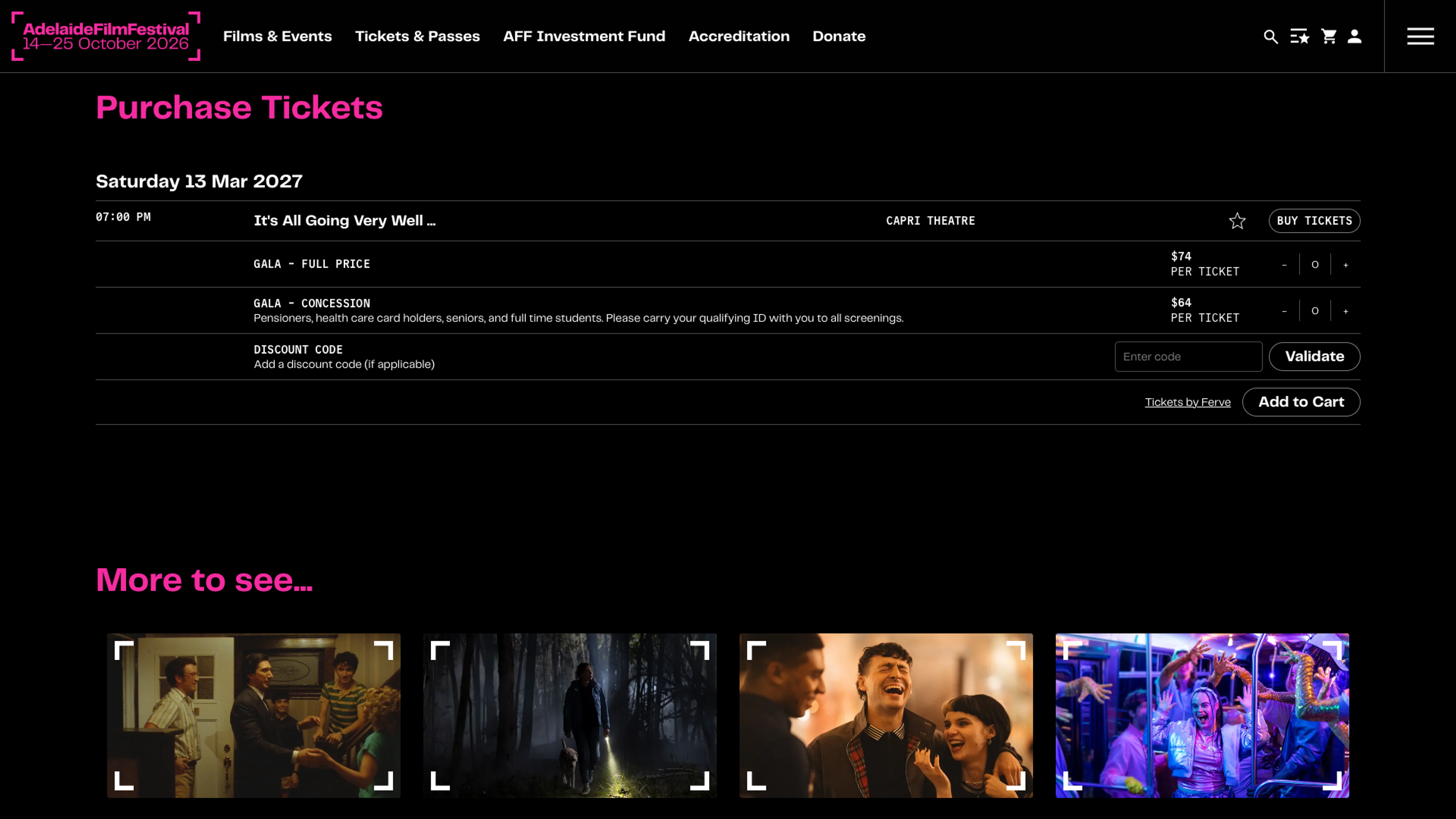
Ticketing is deeply integrated with Ferve rather than treated as a separate destination. Live session information, pricing and cart actions appear within the Adelaide Film Festival interface, keeping the journey coherent from discovery to purchase.
The same commerce layer supports the festival’s wider offer, including passes, memberships, donations and vouchers, as well as the more complex rules attached to particular sessions. Audiences can move from a program page or schedule row to an actionable ticket choice without losing context.

A model for films, sessions and everything between
Film festivals do not fit neatly into a conventional events calendar. A short may screen inside a package, a feature may have several sessions, and a talk or gala may sit outside familiar film categories.
The platform connects films, screening events and public program entries as distinct but related records. That structure keeps the printed-program logic, live schedule and ticketing data aligned while giving features, shorts, talks and mixed-format events an appropriate public presence.
Program pages combine imagery, trailers, synopses, credits, reviews, laurels, related works and live sessions. Editors can refine presentation and recommendations without overwriting the imported source data.

Editorial control at festival pace
A custom headless Statamic CMS brings programs, sessions, films, people, venues, news and organisational content into one editorial system, with a Next.js frontend presenting that content to audiences.
Automated Ferve imports create and update connected records at scale. Targeted re-imports, progress reporting and cache revalidation help the team respond when program information changes, while a staging-to-main workflow gives staff space to proofread and prepare each release.
Beyond the program, reusable page-building sections and centralised festival settings allow the team to shape campaign and year-round pages without commissioning a new template for every update.
A platform with a life between festivals
The experience is designed to remain useful after the final session. Adelaide Film Festival Investment Fund projects have durable storytelling pages and a searchable archive, while previous festival editions retain their own programs, highlights, trailers and print guides.
That long-term structure turns the website into more than an annual campaign. It becomes a growing record of the festival’s role in presenting cinema, supporting filmmakers and connecting audiences with screen culture.

The result is a festival platform that works in three modes.
Before the event, it helps audiences discover, compare and plan.
During the festival, it brings together live schedules, availability, Watchlists and ticketing.
Between editions, it gives Adelaide Film Festival a flexible publishing system and a permanent home for its Investment Fund and archive.
The platform launched for the 2024 program and continues to support subsequent festivals. Its value is not in hiding complexity entirely, but in putting that complexity to work: for audiences making decisions, for staff managing a fast-moving program, and for an organisation building relationships with film and filmmakers year-round.