Case Study
Adelaide Design Week
Website with festival program
Client
Adelaide Design Week
Collaborator
Features

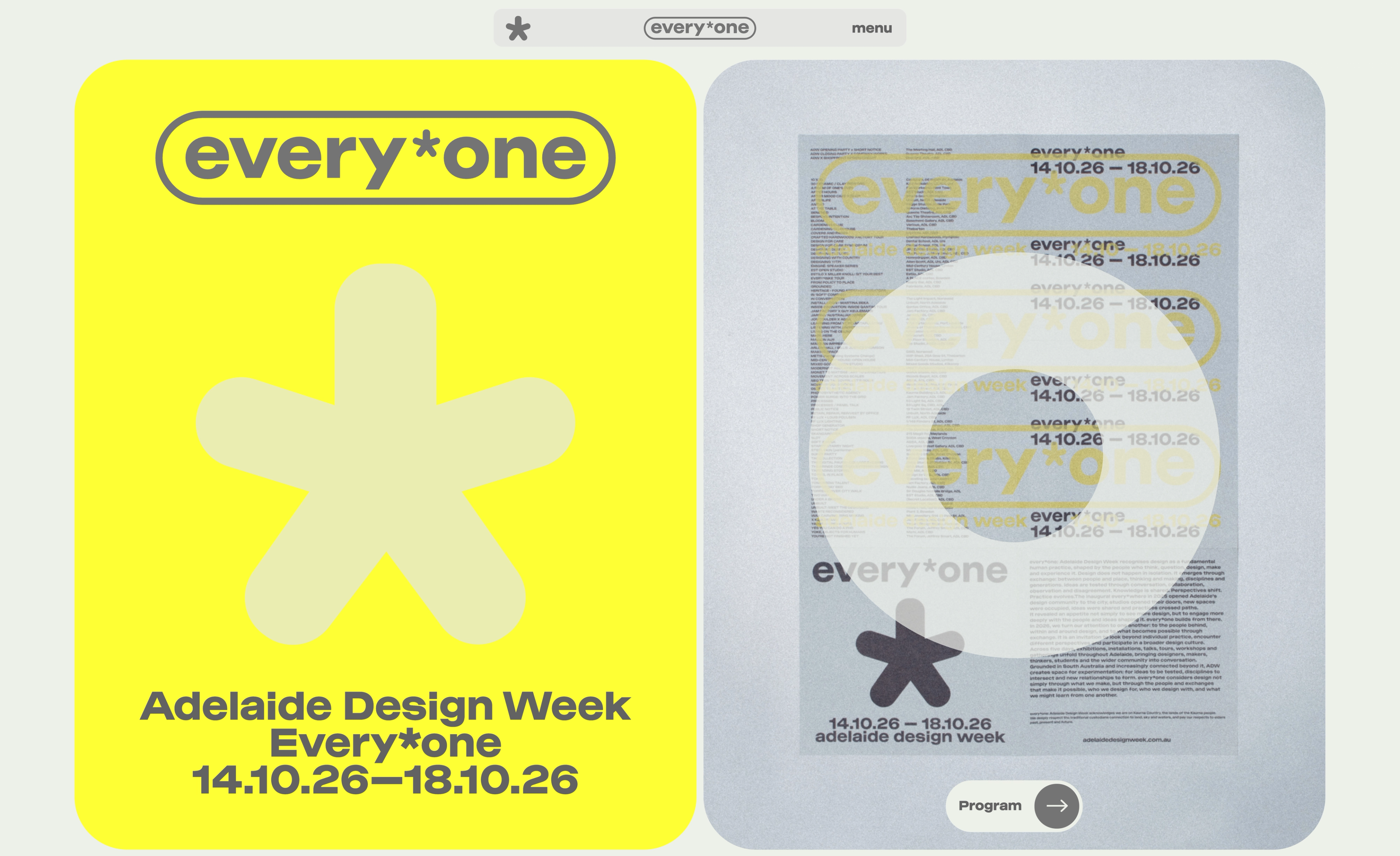
Exhibitions, installations, conversations, open studios, tours and workshops happen at different times and in different places, giving audiences plenty to discover but also plenty to organise.
Working with Adelaide Design Week and creative studio , Rockethouse built a website that brings the 2026 programme, event details, mapping, calendar actions and festival history into one coherent experience.
As a Gold sponsor of the 2026 event, Rockethouse’s support also extends beyond development, backing the programme itself.
The website had to hold two ideas at once. It needed to feel unmistakably like Adelaide Design Week, carrying the graphic force of 2049©’s every*one identity, while behaving like dependable event infrastructure. People needed to understand what was on, when it was happening, where to find it and how to attend. The team needed a system that could keep those details accurate as the programme evolved.
The programme, as a planning tool
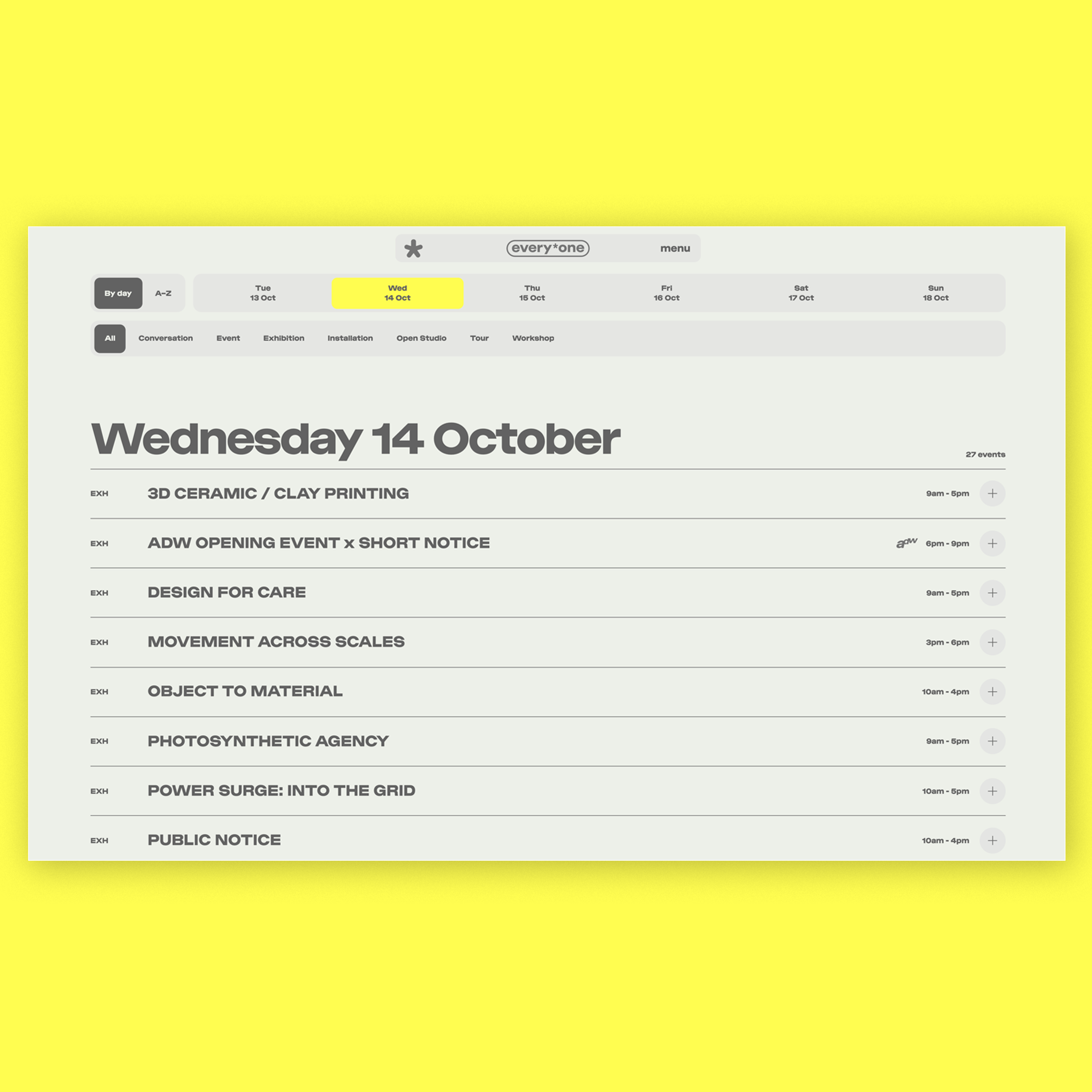
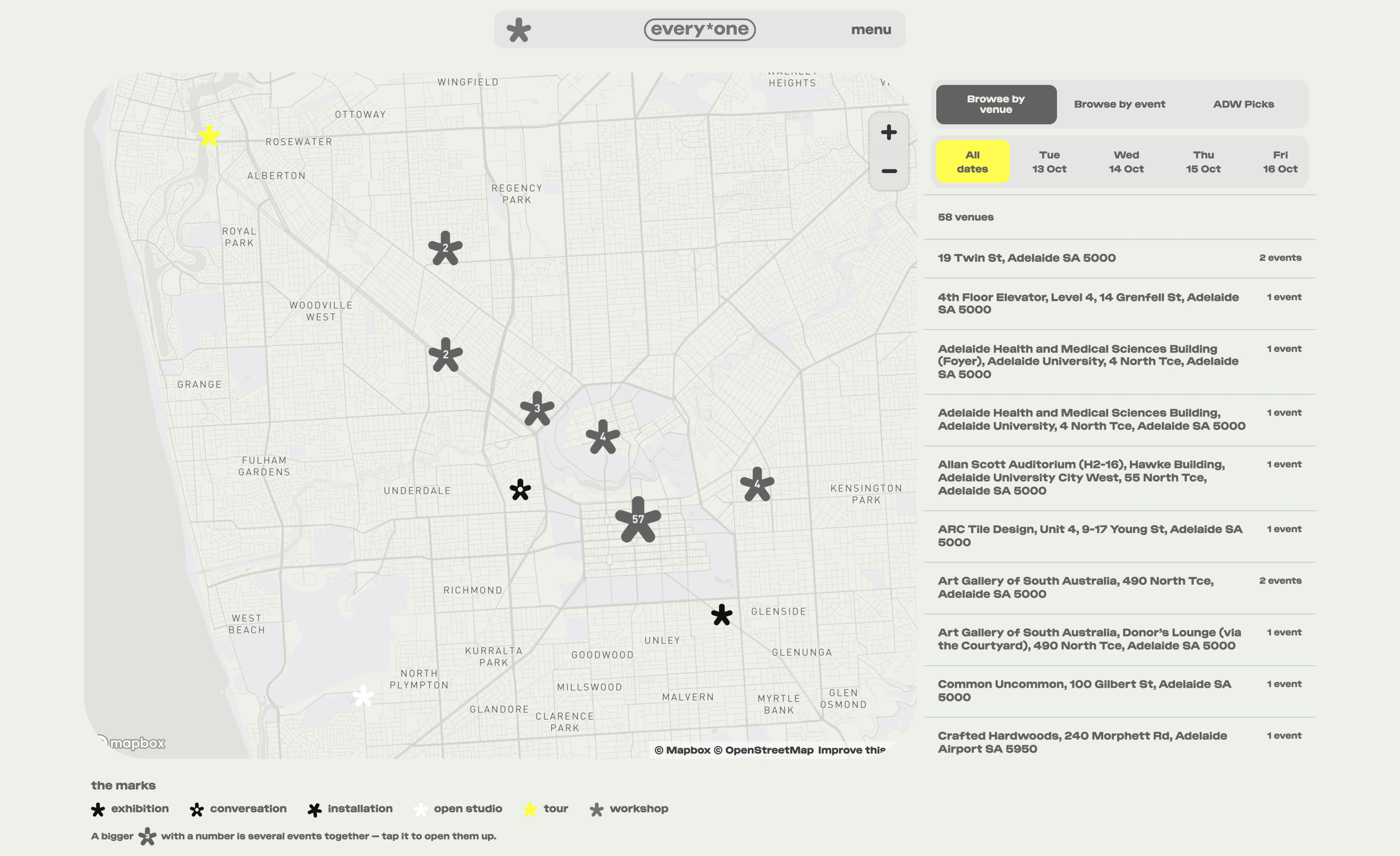
The programme can be explored by day or from A to Z, then narrowed by event type. Each entry expands in place to reveal its venue, schedule, contributors, description and ticketing status, keeping people oriented inside the wider programme instead of sending them through a maze of disconnected pages.
Direct event links open the right entry automatically, while Apple, Outlook and Google Calendar actions turn discovery into a plan. Events with several sessions remain one coherent programme item, with each date and time represented clearly.


The city becomes part of the interface
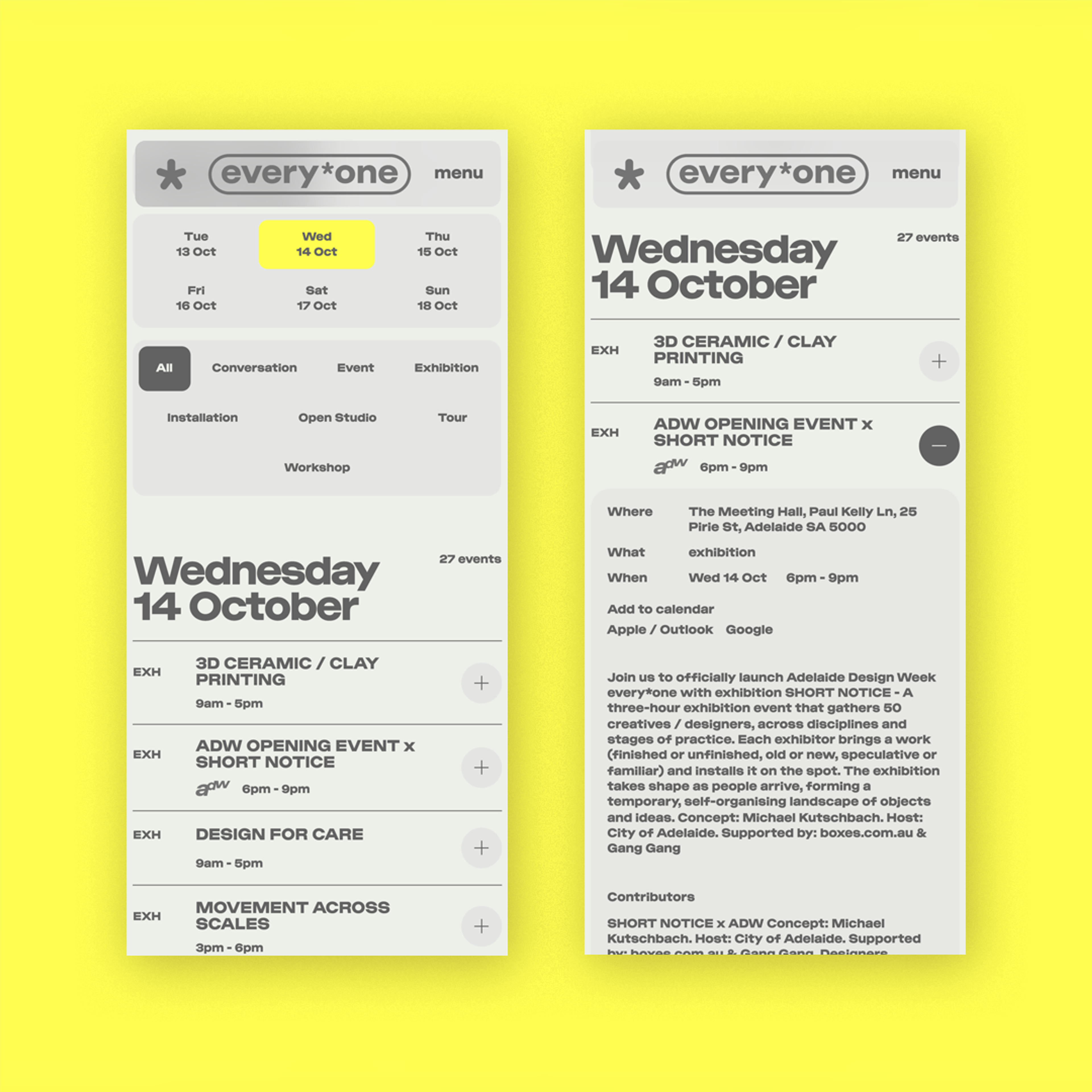
Adelaide Design Week is shaped by the places that host it, so the map is not an afterthought. It is a second way into the programme.
Audiences can browse by venue or event, move through the week day by day, or switch to a curated collection of ADW Picks for places to eat, drink and spend time between events. Map markers and the accompanying list work together, giving people a visual sense of the festival’s reach without making location the only way to navigate it.
One event, one source of truth
At the centre of the platform is a custom Statamic content model built around programme entries, sessions, venues, people, partners and festival editions.
An event is entered once, then its sessions drive the daily programme, inline details, map, calendar files and future archive. Reusable venue records keep location information consistent, while structured types and editorial controls make it possible to shape different views without duplicating content.
The result is less manual work for the team and fewer opportunities for public information to drift out of sync.

Motion with purpose
The visual identity is energetic, but the interface stays controlled. Soft menu transitions, rolling type, animated filters and expandable programme entries give the site a distinct rhythm without moving the information people are trying to use.
Those effects sit on top of semantic, keyboard-friendly controls and respect reduced-motion preferences. The experience remains direct on mobile, where programme planning and venue finding matter most.
Built for more than launch week
The website holds the current programme alongside team, partner, media and archive content. The 2025 edition remains available as its own record, while the underlying edition structure gives future festivals a clear place to live.
That turns the site from a short-lived campaign into an evolving platform for Adelaide Design Week.

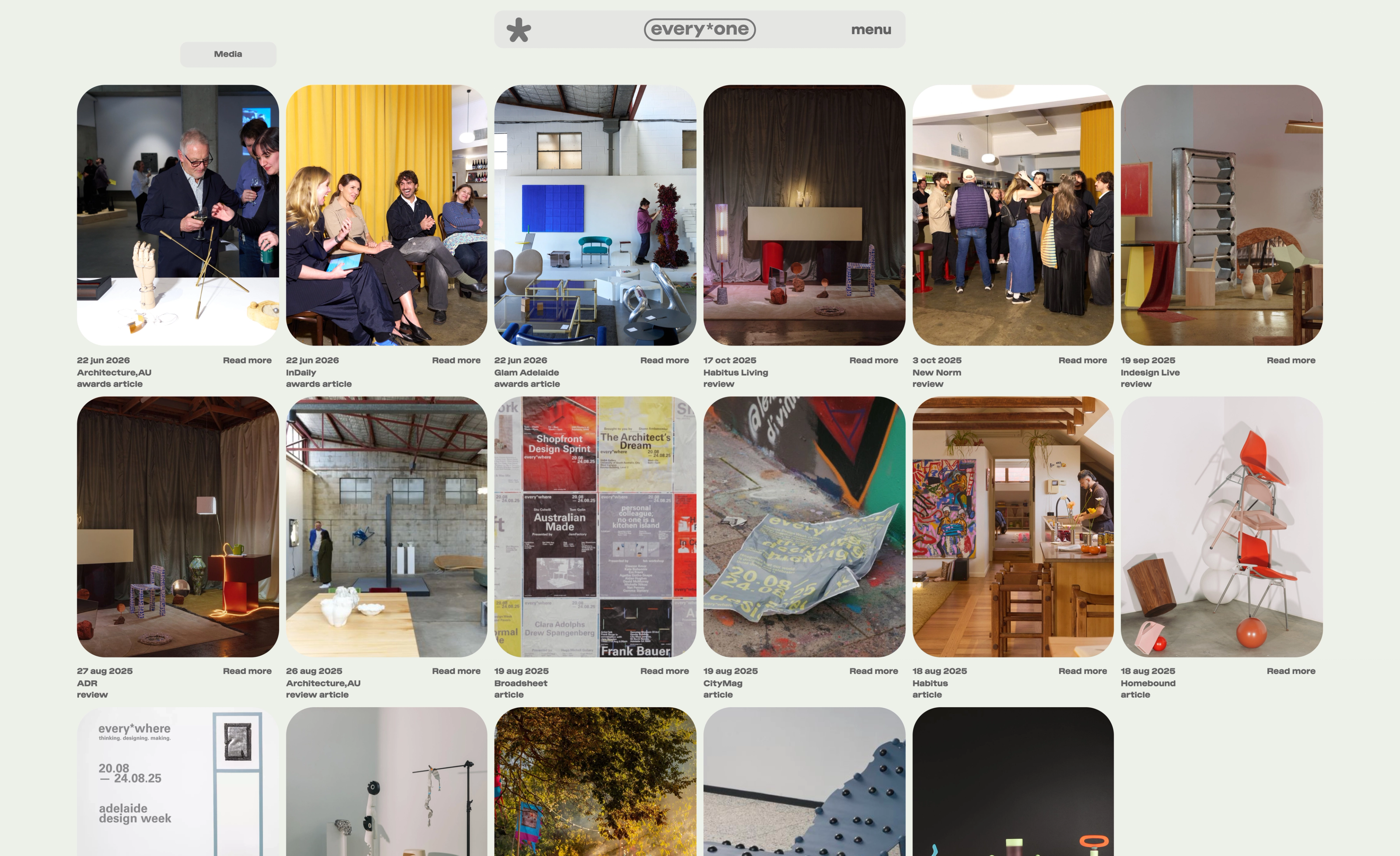

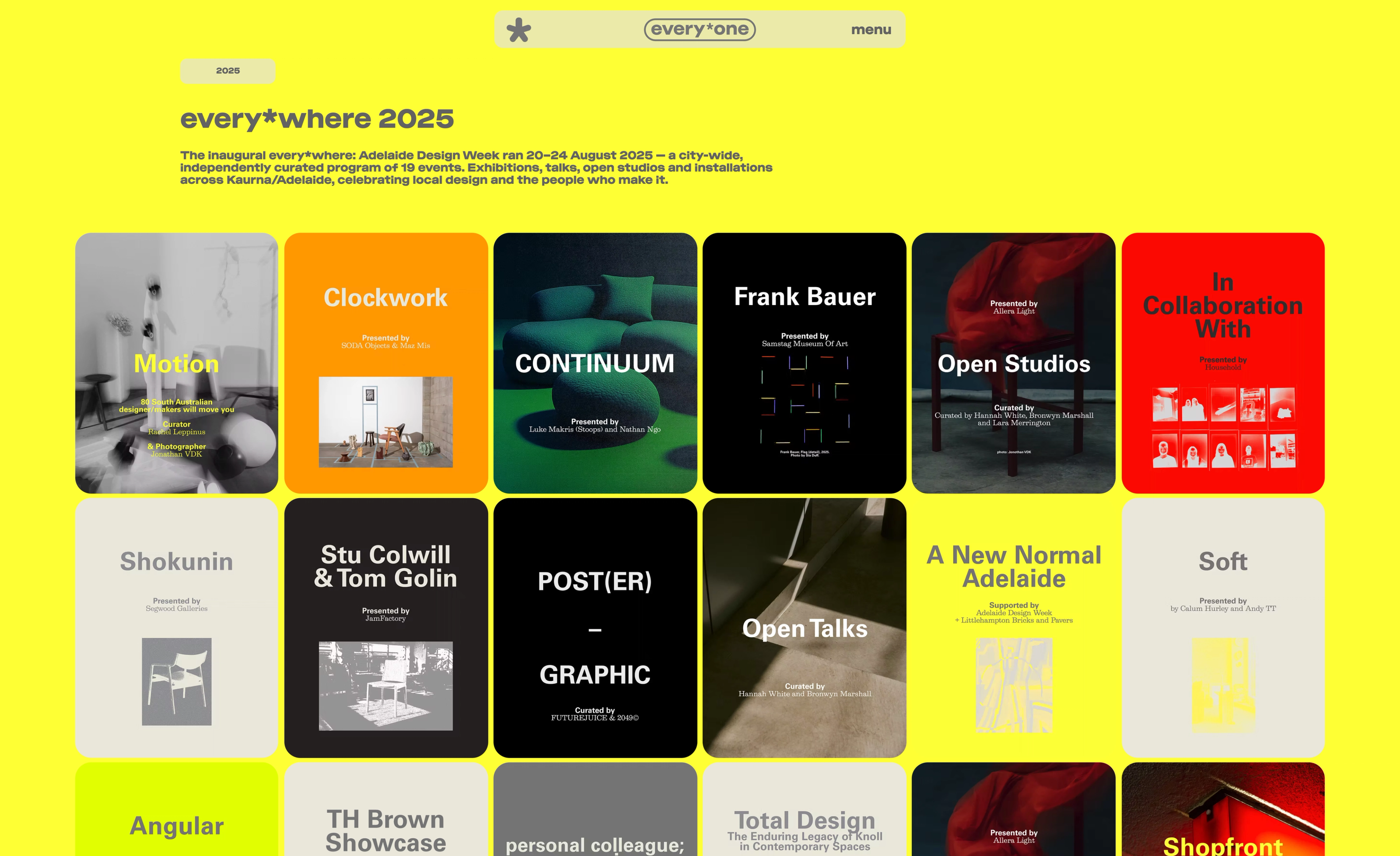
Adelaide Design Week now has a digital experience that can carry both the personality of the event and the practical weight of its programme.
Audiences can move from broad discovery to a specific event, venue, booking action or calendar entry without losing context. The organising team has a structured editorial system rather than a collection of one-off pages. The 2049© identity remains present at every scale, from the homepage to the smallest interaction, while Rockethouse’s technical layer keeps the experience useful across desktop and mobile.
The result is not simply a place to read about Adelaide Design Week. It is a working companion for moving through it.